


British hospitals emphasized individuals with non-emergency conditions to stay away after a cyber attack affected huge parts of the country’s National Health Service.
16 NHS organizations of British Hospitals were hit in the U.K. on the day of Friday, while a major number of Spanish companies were also attacked using ransomware. It is not still clear if the attacks were coordinated.
Security experts in the U.S. claimed that security and health care leaders are seeking to find solutions to stop the NHS outbreak from recurring here.
“The NHS has faced a huge cyber attack, we’re working with law enforcement and our advice will follow shortly,” Action Fraud, the central cyber-crime unit of U.K. said on Twitter. The National Cyber Security Center stated: “We’re aware of cyber tragedy and we’re working with NHS Digital and the National Crime Agency to investigate.”
British Hospitals in London, North West England and Central England have been impacted, in accordance to the BBC. Mid-Essex Clinical Commissioning Group, which runs British hospitals and ambulances in a place east of London, stated on Twitter that it had “an IT problem affecting some NHS computer systems,” adding “Please don’t attend Accident And Emergency unless it is an emergency.”
The affect on services isn’t a result of the ransomware itself, but because of the NHS Trusts shutting down systems to stop it from spreading, stated Brian Lord, a former deputy director of Government Communications Headquarters (GCHQ), the U.K.’s signals intelligence agency, who is now managing director of cybersecurity firm PGI Cyber. Lord, who explained an attack of this kind as "inevitable," said the impact was exacerbated because most NHS Trusts had "a poor understanding of network configuration, meaning everything has to shut down."
A screenshot of an apparent ransom message, sent to a hospital, demonstrated a demand for $300 in bitcoin for files that had been encrypted to be decrypted.
Employees across the NHS have since been sent emails from the health service’s IT teams warning not to open or click on suspicious attachments or links.
National Cryptologic Center of Spain, which is part of the intelligence agency of country, said on its website that there had been a “massive ransomware attack” against a huge number of Spanish agencies affecting Microsoft Windows operating system. El Mundo reported that the attackers sought a ransom in bitcoin.
“We are aware of reports and are looking into the situation,” claimed a Microsoft spokesperson.
Ransomware generally gets onto a computer when an individual unsuspectingly downloads a file that looks like a normal attachment or, alternatively, clicks on a web link. A hacker then can trigger the malware to freeze the computer, prompting a person to pay a ransom or lose all their files.
Hospitals have been a usual target because the culprits know how critical digital records are for treating sufferers.
Ransomware attacks have also been soaring. The number of such attacks increased 50% in the year of 2016, in accordance to an April report from Verizon Communications. These kinds of attacks account for 72% of all the malware incidents involving the healthcare industry in the year of 2016, in accordance to Verizon.
"The large-scale cyber-attack on our NHS today is a major wake-up call," stated Jamie Graves, chief executive officer of cyber-security company ZoneFox.
Andrew Barratt, managing principal of Coalfire, a company which gives cybersecurity risk assessments to the healthcare sector, said that severak NHS hospitals used personal computers with outdated Windows-based operating systems, which have makes them convenient to attack. He said several of these systems were too old to patch and that many NHS Trusts didn’t spend enough time on technical best practices and audits, leaving them susceptible to a variety of potential cyber attacks, involving ransomware.
Showing posts with label NHS. Show all posts
Showing posts with label NHS. Show all posts
Friday, May 12, 2017


Monday, May 9, 2016
Are Google’s Predictive Analytics Worth Sufferer Privacy Threats?
A Google company giving predictive analytics to the NHS is finding itself in hot water after a data-sharing agreement raises queries over patient privacy and data utilization.
The healthcare industry has not always been type to Google, which has dabbled in the shallows of sufferer data and personalized health for various years now, but a promising new contract with the United Kingdom’s National Health Service (NHS) may give the tech titan with the predictive analytics proving ground it has been searching for.
A data-sharing agreement between DeepMind, a Google-owned predictive analytics company, and the Royal Free NHS Trust will foster the development of an app that makes better the detection and treatment of acute kidney injuries, a major cause of emergency department visits, hospitalizations, and sufferer deaths.
DeepMind will have access to information on more than 1.6 million sufferers who visit 3 London hospitals each year to support its Streams app, a clinical decision support tool that sends care alerts and allows contributors to access test results in near real-time.
Friday, April 29, 2016
How big data is making better the mental healthcare
Three things get Jen Hyatt out of bed in the morning – her teenage daughter, big numbers and uncertainty about the dominant paradigm of the healthcare.
Hyatt explained the "intractable issue in healthcare" of focusing on sickness rather than on healthy behaviors. But she also feels that technology could have a transformative role.
When Hyatt heard the figure, in the year 2006, that 50% of people with a diagnosable mental health issue did not even reach their primary care doctor, she decided to do something about it. She founded Big White Wall in the year 2007 in an attempt to reach out to these people, as well as to "shift from a model of sickness to one in which people who need help are supported".
The online community, one of few approved by the NHS, assists the users anonymously seek support from peers and therapists.
Big White Wall gives people "a choice" in the kind of treatment they get, said Hyatt. Cognitive behavioural therapy, while often successful, is not a panacea.
Hyatt is now working on a newapp for teenagers, called amo that draws on positive psychology, behavioural psychology and neuroscience. "We require looking at applying technology to help," she stated. "Let's not move deckchairs around on the Titantic – let's address the big numbers."
Tuesday, April 26, 2016
'Junior doctors are struggling for a dying NHS': healthcare workers speak out
They are fighting for a dying NHS and affordable working conditions’
What will you be doing on strike day? I’ll be the sole doctor covering the department (usually 8 doctors).
How do you feel about junior doctors staging a full walkout? They are fighting for a dying NHS and reasonable working conditions. This is the culmination of years of abuse. My take home salary is 10 percent lower than it was in the year 2004 but I have moved from being a senior house officer to a consultant. My contracted hours are exactly the same. Juniors today are so poorly paid they cannot expect to pay off their medical school debts for many years and purchasing a home is utter fantasy in the city of London.
‘I do not support any strike by frontline health staff’
What will you be doing on strike day? We are already ready for making sure our services are covered by senior clinicians on both days. We will be developing how many doctors attend on each day and informing NHS England.
Wednesday, April 20, 2016
The Exercise classes for over the 65s assist to cut falls threat
It is merely your average on the day of Monday morning at Morden Baptist Church in south-west London, and people aged 65 plus are arriving for exercise classes designed for those who are risk of falling.
Falls are a major public health issue and the most usual cause of death from wound in over 65s. The King’s Fund estimates that falls account for 40 percent of all ambulance call outs, and are a major cause of older persons being admitted to hospital. It puts the cost of falls to the England’s NHS at £2bn a year.
The Morden classes – dealing muscle deterioration, specifically in legs and ankles – have been running for a year. They are commissioned by Merton clinical commissioning group from trust’s falls prevention service and were placed by service lead Stephanie Bruggemann.
“The borough has gone from having exercise classes which were 1 size fits all with about 20 persons coming and merely one freelance instructor, to outcome-measured, ability-graded sessions which involve a health advice component, and are completely targeted at preventing falls,” claims Bruggemann.\
Thursday, March 31, 2016
Can the NHS give the healthcare we need?
The NHS is uniquely far away from a crisis. Even so, the last some months have been specifically tough. The junior doctors’ strikes have grabbed the headlines, but perhaps even more worrying for the future of the NHS is the state of its finances. Trusts are falling deeper into debt, yet the greatest budget squeeze is still a year away. It may be time, then, to reconsider the way the health service is funded.
The subject was handled by a panel of eminent doctors and journalists at a recent Spectator lunch. The query was: ‘Can the NHS give the healthcare we need?’ a powerful consensus held the answer was no and that the NHS required more money to cope with dramatically rising demand. That was the easy bit. The harder query was how the money should be raised.
The attendees were Professor David Haslam, chair of NICE, Professor Jane Dacre, president of the Royal College of Physicians, Dr John Giles, medical director at Benenden Hospital Trust, Fraser Nelson, editor of The Spectator, Hugh Pym, BBC health editor, Dr Mike Smith, trustee of the Patients Association, Daisy McAndrew, former economics editor at ITV, Chris Walters, chief economist at Monitor, which regulates health services in England, and Dr James Kingsland, president of the National Association of Primary Care. The discussion was chaired by Andrew Neil, chairman of The Spectator magazine group.
An early recommendation was to introduce charges. It was pointed out that in Sweden, one of Europe’s most left-wing countries, no one thought twice about paying the equivalent of £30 or £50 to see their GP. The NHS, it was discussed, should be better at harnessing funds from the relatively well-off. Charges would also have the profit of damping down demand.
Thursday, January 14, 2016
Most FDA-Approved Apps Vulnerable to Cyber Threats
More than 80% of mobile health apps passed by the Food and Drug Administration have tested positive for 2 critical security susceptibilities, in accordance to a vendor specializing in anti-tamper protections for software.
Arxan Technologies analyzed that 84% of the mHealth apps tested did not adequately deal at least 2 of the Open Web Application Security Project (OWASP) Mobile Top 10 Threats.
Most of the apps were susceptible to application code tampering and reverse-engineering. Although, 95% of the FDA-approved apps lacked binary protection, which could result in privacy violations, theft of personal health data, and tampering.
Instated of compromising sensitive health data, the company alerted that such susceptibilities could lead to a health app being reprogrammed to deliver a lethal dose of medication. The FDA was not instantly present for comment.
The findings of Arxan were part of its fifth Annual State of Application Security Report, which involves an analysis of 71 of the most famous mobile health apps from the U.S., U.K., Germany, and Japan—with 86% of those apps discovered susceptible to at least 2 of the OWASP Mobile Top 10 Threats.
Health apps tested that were passed by the U.K. National Health Service did not fare much better than those passed by the FDA, as NHS did not accurately deal at least 2 of the OWASP Mobile Top 10 Threats, and 100% of the apps were discovered to be lacking binary protection.
Arxan also did an analysis of 238 mobile health app users, finding 78% consider their apps are “adequately secure,” and 50% are confident that “everything is being implemented” to secure their apps. At the similar time, 76% stated that they would change apps if they knew they were not safe or if they knew alternative apps were more protective.
Patrick Kehoe, chief marketing officer of Arxan, alerted that “in the rush to bring latest apps to market, agencies tend to ignore critical security measures that are proving serious to customer loyalty.”
Monday, March 1, 2010
Telehealth: a keystone for future healthcare delivery
| Written by Matthew Marshall, Director, Tunstall | |
 Matt Marshall is responsible for developing Tunstall’s range of telehealth propositions within the health sector. He started his career within medical equipment before moving into telecoms and software and has nearly 20 years of experience building secure and rewarding customer relationships. He spends a lot of time working very closely with customers who are early adopters of telehealth and those evaluating the technology. Matthew Marshall of Tunstall explains the role telehealth is playing in supporting health and social care professionals and enabling them to deliver more integrated, flexible and person-centred care Over 17.5 million people in the UK live with a long-term condition, which places a significant strain on health and social care resources. It is estimated that 80% of GP consultations relate to a long-term condition, and that 60% of hospital bed usage is by people with a long-term condition. The treatment and care of those with long-term conditions also accounts for 69% of the Primary and Acute care budget in England, placing a clear economic burden on the NHS. Indeed, it is estimated that the UK economy stands to lose £16billion over the next 10 years through premature deaths due to heart disease, stroke and diabetes. As a result, momentum for telehealth has been growing over the last few years, as those with health and social care responsibilities look for innovative ways to manage long-term conditions effectively and help reduce some of the pressure on the NHS. Monitoring Long-Term Conditions with Telehealth 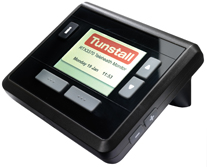 The UK Government is making committed steps towards more person-centred and flexible care delivery. Its Our Health Our Care Our Say white paper, Lord Darzi’s NHS Next Stage Review and Putting People First agenda all place a clear emphasis on longer-term planning and on providing more preventative community-based care delivered at a local level that is tailored to meet the specific health and social care needs of the individual. Telehealth supports the Darzi report’s call for greater provision of care closer to people’s homes, by supporting those living with single or multiple long-term conditions, including Chronic Heart Failure, COPD, diabetes and hypertension, helping them to continue living independently by providing more personalised, community-based care. Telehealth is now being mainstreamed by PCTs across the country in order to prevent avoidable hospital admissions to hospital and monitor long-term needs within the home. The increasingly widespread use of telehealth solutions is also transforming the ability to manage chronic disease and long-term conditions in the community and shift the balance away from a reliance on hospitals and long term institutional care. Telehealth: supporting effective, community-based care Telehealth allows nursing staff to remotely manage patients, ensuring support can be provided at an early stage when needed, and at the same time enabling them to prioritise visits and manage their case loads more effectively, for best use of healthcare resources. 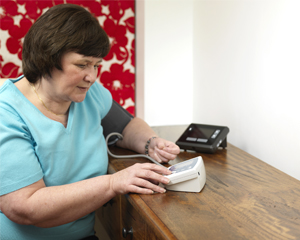 Patient data is transmitted to community nurses on a daily basis, enabling them to triage their ‘virtual ward’ against agreed vital signs criteria and apply an order of priority to the visitation schedule. This approach provides clinical staff with more accurate information about a patient’s condition, allowing them to focus their time accordingly so patients experiencing a critical change receive treatment as soon as it is required. Being able to monitor and detect changes at an early stage also enables nursing staff to reduce the number of acute admissions to hospital and resulting dependency on secondary care, improving outcomes and ensuring best use of available resources. A key additional benefit of telehealth is that it also educates patients to be more aware of their own symptoms and to proactively manage them which leads to an improved quality of life for patients and carers. It encourages patients to feel more in control of their condition, which is a key factor in helping to improve healthcare outcomes. Measuring the benefits of telehealth: reducing admissions and ensuring effective use of resources Sheffield PCT took the decision to deploy telehealth solutions from Tunstall, in order to tackle the issue of COPD in the community. During a recent pilot, home visits by community COPD nurses were reduced by an astonishing 80%, cutting travel costs and enabling healthcare staff to prioritise their workload, which ensured the most effective use of their time. This innovative approach saw COPD-related hospital admissions dramatically decrease by 50%, saving the PCT £30,000 to £40,000 on a small number of patients and allowing them to purchase more monitors, to further expand the use of telehealth for the management of long-term conditions. Meeting individual patient needs in Nottingham With around 22,000 hospital admissions per year in Nottingham linked to long-term conditions – 40% of all hospital activity – mainstreaming telehealth has dramatically reduced hospital admissions and GP visits, lessening the burden on primary and acute care providers and ensuring NHS resources are used effectively. 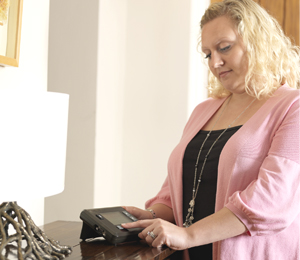 Nottingham PCT uses the telehealth technology from Tunstall to monitor around 800 people each year with long-term conditions such as COPD and congestive heart failure. This approach supports independent living, promotes patient self-management and reduces the need for repeat hospital admissions. A key benefit of the telehealth solutions is that they can be tailored to meet the specific needs of the individual patient. As well as using the monitor to measure vital signs, the community matron can programme the monitor to ask the patient a set of medical questions specific to their condition; this helps clinicians further determine the status of their patient’s condition. A healthy outlook for telehealth Telehealth solutions are playing a pivotal role in supporting older people and those with long-term needs to live independently, by effectively managing their health and well-being. Primary Care Trusts mainstreaming telehealth have demonstrated telehealth delivers clear benefits to the patient and the PCT and also to carers and other secondary care sources. As well as delivering significant reductions in hospital admissions, telehealth has also enabled Trusts to make financial savings. The use of telehealth in Sheffield has seen a 50% decrease in hospital admissions. It has been calculated that based on a cost of £2,000 per admission, saving 50 admissions a month, could potentially save the PCT £1,200,000 per year. Sheffield and Nottingham PCTs have witnessed the benefits of telehealth in improving patient care and in helping to ensure best use of resources. Tunstall is working with these and many other Trusts across the country to further extend their use of telehealth to address other long-term conditions and continue to make it an integral part of their overall model of care. www.tunstallhealth.com 01977 661234 |
Subscribe to:
Posts (Atom)

